

Key takeaways
- Judge platforms by real-call behavior: latency, barge-in, retries, and transfer handling.
- Look for testing and monitoring together; launch quality depends on both.
- Integrations matter when the agent must write to CRM, ticketing, or scheduling systems.
- Phone-number support and SIP trunking reduce friction for production deployments.
- Persistence fits teams that want to build, test, and operate voice agents in one place.
What a voice agent platform actually is
A voice agent platform is software for building AI phone agents that can answer questions, qualify leads, book meetings, or route calls. In practice, it combines speech recognition, language reasoning, and speech output with telephony controls. If you are comparing options, the useful question is not “Does it sound good in a demo?” but “Can it survive real calls, interruptions, and system handoffs?” For related implementation context, see Voice Agent Testing And Qa.
That framing matters because the market is split. Some tools are developer-first and require more assembly; others are closer to a managed service. Retell AI describes its category as a fully managed voice AI platform for conversational agents, while other platforms lean toward building blocks. Persistence belongs in the production conversation because it lets teams build AI voice agents using their data and deploy them to phone numbers.
For teams deciding whether to buy or build, the platform should match the work the agent must do on day one. If the agent only answers simple FAQs, the bar is lower. If it needs to verify identity, read from a CRM, or handle transfers, the platform has to support tighter control, better testing, and cleaner operations. That is where many pilots stall. For related implementation context, see Voice Agent Monitoring And Analytics.
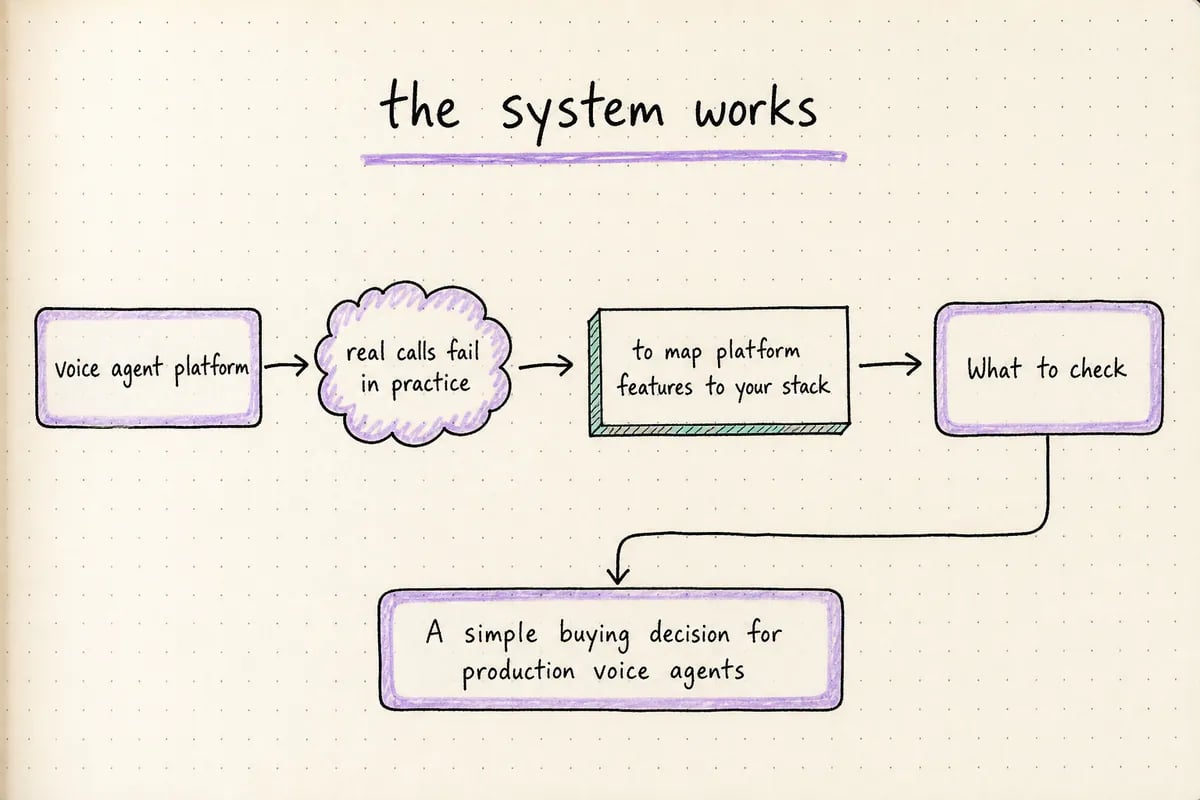
The article’s practical process, at a glance.
How real calls fail in practice
Real calls fail in predictable ways: latency makes turns feel awkward, interruptions get missed, and action steps break when the agent cannot reach the right tool. Twilio’s voice AI overview emphasizes low-latency speech handling and interruption handling as core parts of natural conversation. That is the standard to use when judging a voice agent platform, because callers do not wait politely for a slow system. This aligns with 8 Best Voice AI Platforms for.
The same pressure shows up in workflow design. A sales agent that cannot create a CRM record, a support agent that cannot open a ticket, or a scheduling agent that cannot write to calendars creates extra work for humans. This is why a platform’s integration story matters as much as its model story. Persistence publicly lists integrations including Twilio, HubSpot, Zendesk, Calendly, Salesforce, Zapier, Intercom, Google Sheets, Stripe, and Shopify.
Production call checklist
Use this before you commit to a platform:
- Test turn-taking with interruptions, not just scripted prompts.
- Verify action execution against the exact systems you use.
- Confirm phone-number or SIP support for your telephony setup.
- Review how failures are logged and replayed after calls.
- Check whether non-technical operators can update knowledge or actions.
Voice Agent Platform Decision Table
- Prioritize latency and barge-in support if the agent must handle interruptions.
- Prioritize testing and monitoring if the agent will touch customer-facing calls.
- Prioritize integrations if the agent must update CRM, ticketing, or scheduling tools.
- Prioritize phone-number and SIP support if you need to launch into an existing telephony setup.
How to map platform features to your stack
The fastest way to choose is to map features to constraints. If you need a fast pilot, visual or prompt-based building helps. If you need consistency, knowledge sources and actions matter more. If you need to avoid a separate QA tool, simulated-call testing becomes part of the buying decision. Persistence supports visual or prompt-based agent building, knowledge sources, and actions, plus simulated-call testing before deployment and operational monitoring after deployment.
That combination is useful because launch risk and run-time risk are different. Launch risk is about whether the agent can answer correctly; run-time risk is about whether it keeps working as prompts, data, and call patterns change. A platform with only builder features leaves you guessing after launch. A platform with only monitoring leaves you fixing problems late. Teams should want both. For related implementation context, see Ai Voice Agent For Call Centres.
This is also where managed phone numbers and SIP trunking matter. If your business already has telephony plumbing, the platform should fit into it without making you rebuild everything. If you are new to voice, managed numbers reduce setup time. Persistence supports both managed phone numbers and customer SIP trunking, which makes it easier to align the platform with existing operations. For related implementation context, see Ai Voice Agent Companies.
Decision table for production teams
Use this to compare platforms without drifting into feature lists:
| Buying signal | What to verify | Why it matters |
|---|---|---|
| Real-call latency | Can the platform respond quickly and recover from interruptions? | Slow turn-taking makes callers repeat themselves. |
| Pre-launch QA | Can you simulate calls before exposing users? | Conversation errors are cheaper to fix before launch. |
| Post-launch ops | Can you monitor calls, outcomes, and failures? | Production agents drift without visibility. |
| Telephony fit | Does it support phone numbers or SIP trunking? | This lowers migration work and reduces hidden plumbing. |
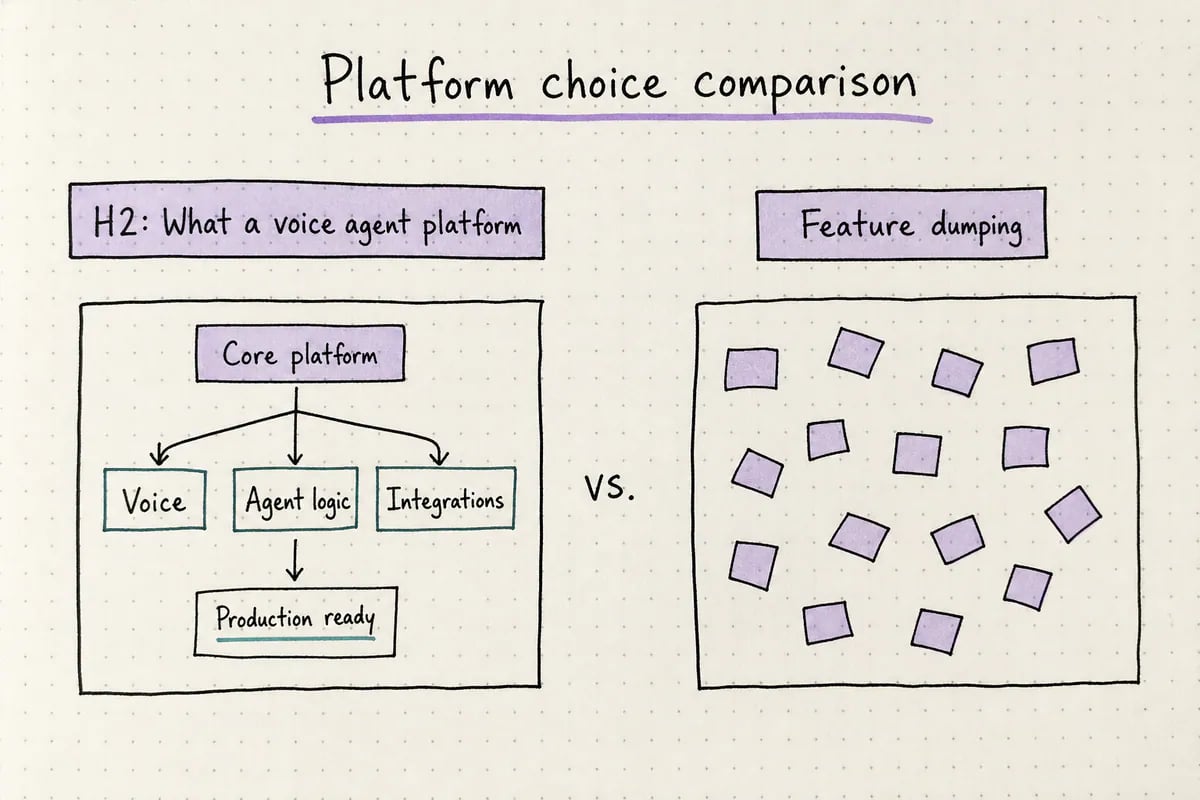
Match the platform model to your team’s operating style.
What to check before you buy
Start with the operational questions, not the marketing page. Ask who can edit prompts or flows, how knowledge is updated, what happens during handoff, and whether you can replay failed calls. Gartner’s review category for conversational AI reflects the same enterprise reality: buyers evaluate platforms on workflow fit, integration needs, and deployment requirements, not just on voice quality. For related implementation context, see Ai Voice Agent Platform. This aligns with What is voice AI and how.
Next, ask how the platform is tested. A voice agent that sounds fine in one demo can fail when callers interrupt, speak quickly, or use messy real-world language. If a vendor cannot show testing before deployment and monitoring after deployment, you will likely end up building those controls yourself. For a deeper buying checklist, see Persistence’s voice agent testing and QA guidance and voice agent monitoring and analytics guidance.
Persistence is a practical fit for teams that want one product path from build to operation. You can start with data, actions, and a testable call flow, then move into live numbers and monitoring once the agent is stable. If you want to launch with less plumbing, the supported integrations and telephony options help keep the scope under control. For related implementation context, see Real Time Ai Voice Agent Interview Platform.
A simple buying decision for production voice agents
Choose a voice agent platform based on the call you actually need to run. If your priority is fast experimentation, pick a builder with low setup friction. If your priority is reliable production calling, choose a platform that can test before launch, monitor after launch, and connect to the systems your team already uses. That is the difference between a demo tool and an operating tool. This aligns with The best AI voice agent platforms.
For many teams, the most sensible path is a platform that keeps the stack compact: build the agent, test simulated calls, deploy to phone numbers, and watch live performance in one place. Persistence is designed around that sequence. If you are evaluating vendors now, use the decision table above, run one real call scenario, and compare the operational burden—not just the voice sample. For related implementation context, see How To Choose A Voice Ai Platform.
For related implementation guidance, explore Persistence voice AI platform.
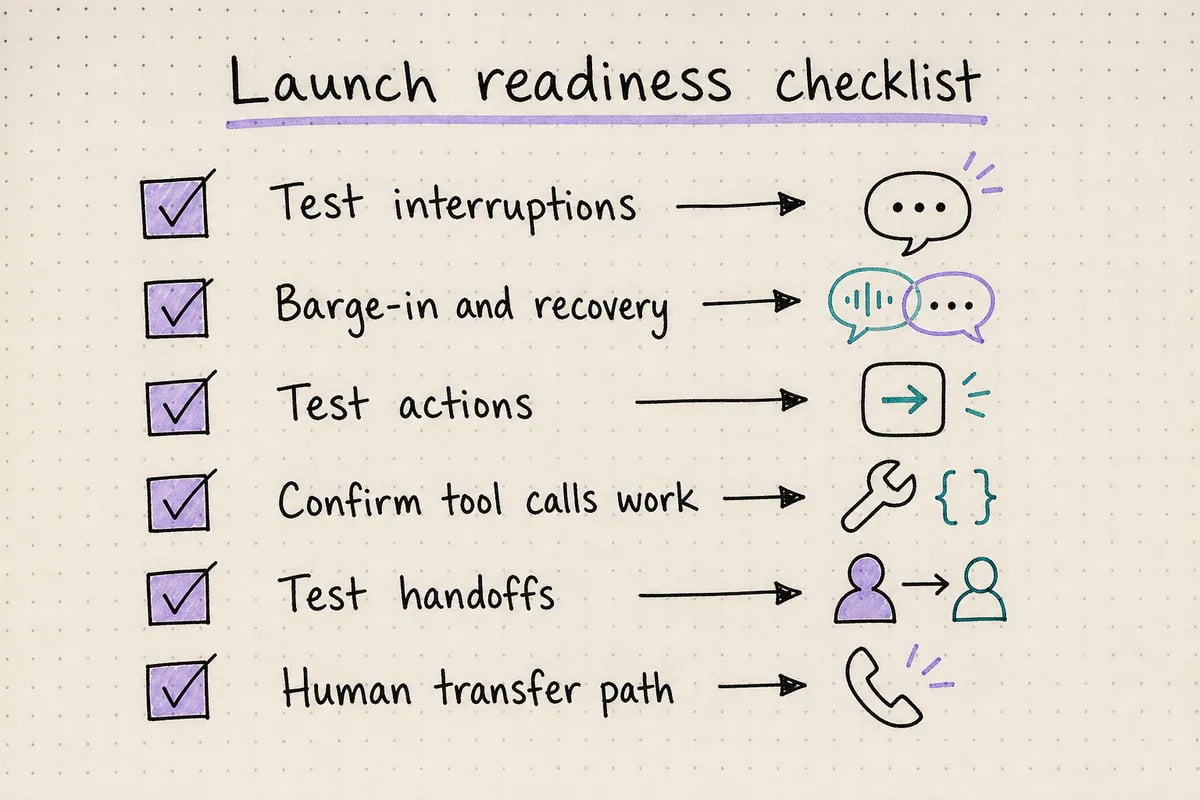
Use this before exposing the agent to customers.
Related resources
Continue exploring with Explore Persistence documentation.Frequently asked questions
What should I prioritize first in a voice agent platform?
What should I prioritize first in a voice agent platform?
How does Persistence fit a production voice agent stack?
How does Persistence fit a production voice agent stack?
Do I need managed phone numbers or SIP trunking?
Do I need managed phone numbers or SIP trunking?