

Key takeaways
- Persistence AI is a voice AI platform that answers and makes phone calls for businesses.
- It adapts to specific sectors, including healthcare, finance, travel, retail, and home services.
- It works by combining speech recognition, a language model, and text-to-speech into a real-time call loop.
- When comparing platforms, look at latency, industry fit, integrations, and how calls hand off to humans.
- The word ‘persistence’ also means the trait of continuing despite difficulty — related to grit, perseverance, and tenacity.
What is persistence AI
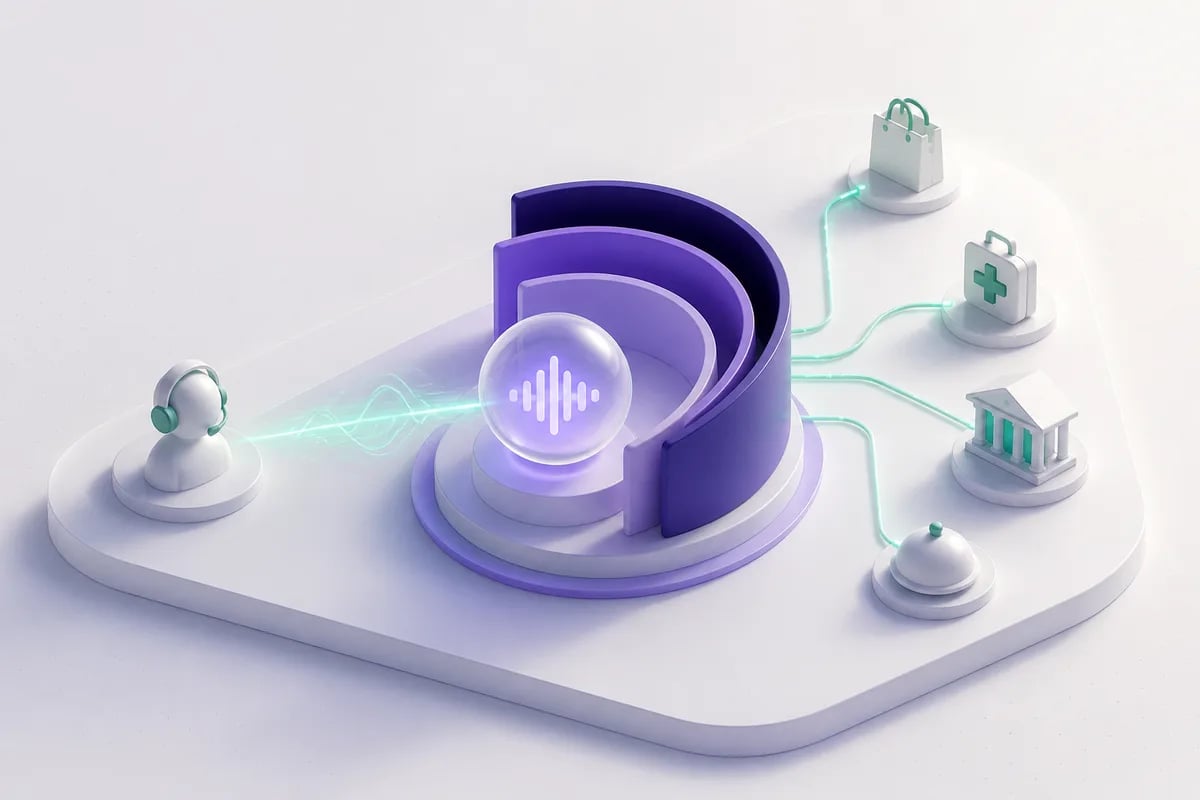
Persistence AI is a voice AI platform that handles phone calls for businesses. It answers inbound calls, places outbound calls, and holds a real-time conversation with the person on the line. The goal is to do routine call work without a human agent for every call.The platform is built to adapt to specific industries. Persistence works across healthcare and med-tech, banking and insurance, solar energy, travel, hospitality, e-commerce, and home services. Each sector has different questions, scripts, and compliance needs, so the same core system is configured per use case.One note on the name. ‘Persistence’ is also a plain-English word for the trait of continuing through difficulty. That meaning overlaps with grit, perseverance, and tenacity. This post is about the voice AI platform, but the two ideas share a name on purpose.
What this guide covers
What is persistence and perseverance
Persistence is the act of continuing to do something despite obstacles or delay. Perseverance is steady effort held over a longer stretch of time, usually toward a hard goal. The two words are close, and in everyday use people treat them as near-synonyms.Related terms add shades of meaning. Grit is passion plus long-term stamina. Tenacity is a stubborn refusal to let go. All four describe some version of not quitting.We mention this because search for ‘persistence’ returns both meanings. If you landed here looking for the trait, that is the short version. The rest of this post is about Persistence AI, the voice platform.How does persistence AI work
Persistence AI works by running a real-time loop during a phone call. It listens to the caller, converts speech to text, decides what to say next, and speaks a reply back. That cycle repeats for the length of the call.Three parts do the heavy lifting. Speech recognition turns audio into text. A language model reads the text and picks a response based on the business’s scripts, rules, and data. Text-to-speech turns that response back into a natural-sounding voice. The whole round trip has to happen fast enough to feel like a normal conversation.Around that loop sit the integrations. The system can look up a customer record, book an appointment, or pass structured data to a CRM. When a call needs a human, it hands off. The value is less in any single component and more in how tightly they run together under a few hundred milliseconds of pressure.Benefits of persistence AI
The main benefit of persistence AI is call capacity that does not depend on staffing. It can answer every inbound call, run outbound campaigns, and cover hours when no agent is available. That removes the queue and the missed-call problem.Consistency is the second benefit. A voice agent follows the same script and the same compliance rules on every call. It does not get tired or rushed at the end of a shift. For regulated industries, that predictability matters.Industry fit is the third. Because Persistence configures per sector, the agent knows the right questions for a clinic versus a lender versus a solar installer. A generic bot that treats every business the same tends to break on the specifics.Best persistence AI platform: what to look for
The best platform is the one that fits your call types, not the one with the longest feature list. Start with the calls you actually run — inbound support, appointment booking, qualification, collections — and test against those.Check four things. Latency, because a slow reply feels broken. Industry fit, because a healthcare intake call is nothing like a retail return. Integrations, because a call that can’t touch your CRM or calendar is a dead end. And human handoff, because some calls should always reach a person, and the transfer should be clean.Run a real pilot before you commit. Listen to recordings. Count how often the agent gets stuck, how often it hands off correctly, and how the caller reacts. Vendor comparisons like Persistence versus Bland versus Retell are a useful starting point, but your own call data is the real test.How Persistence does it
Persistence is a voice AI platform built to adapt to your sector. It covers healthcare and med-tech, banking and insurance, solar energy, travel and tourism, hospitality, e-commerce and retail, and home services. The same core system is tuned to the scripts and rules of each.The design goal is a natural, real-time phone conversation with the right integrations behind it. That means the agent can do useful work on the call, not just read a menu. For a deeper look at how it stacks up against other tools, see the Persistence versus Bland versus Retell comparison.If you want to try it, you can start for free or contact sales. The honest advice is the same as above: pilot it on your own calls first.For related guidance, continue with Persistence in 2026: Everything We Shipped and Build with us: Connect Persistence AI Voice Agents to Your CRM.Related resources
- Where to Find Persistence: Our Social Channels
- What We Publish on LinkedIn
- Explore Persistence solutions
Related resources
Continue exploring with Where to Find Persistence: Our Social Channels, What We Publish on LinkedIn, and Explore Persistence solutions.Related resources
Continue exploring with Where to Find Persistence: Our Social Channels, What We Publish on LinkedIn, and Explore Persistence solutions.Related resources
Continue exploring with Where to Find Persistence: Our Social Channels, What We Publish on LinkedIn, and Explore Persistence solutions.Frequently asked questions
What is persistence AI?
What is persistence AI?
Persistence AI is a voice AI platform that handles phone calls for businesses. It answers inbound calls, places outbound calls, and holds a real-time conversation with the person on the line.
What is persistence and perseverance?
What is persistence and perseverance?
Persistence is the act of continuing to do something despite obstacles or delay. Perseverance is steady effort held over a longer stretch of time, usually toward a hard goal.
How does persistence AI work?
How does persistence AI work?
Persistence AI works by running a real-time loop during a phone call. It listens to the caller, converts speech to text, decides what to say next, and speaks a reply back.
Try Persistence
Build reliable voice AI with Persistence
Design, test, and deploy production-ready voice agents.