

Key takeaways
- Customer relationships are built through consistent interactions, and those interactions depend on reliable data flow between systems, not just goodwill or scripts.
- A single system of record for customer interaction history prevents the fragmentation that erodes trust across sales, support, and billing touchpoints.
- Failure handling—what happens when a CRM sync fails or a webhook times out—is often the real determinant of customer experience quality, not the front-end interface.
- Voice AI agents add a new data-flow layer: call transcripts, actions taken, and outcomes must sync back to CRM and support systems in real time.
- A decision framework for evaluating integration reliability should weigh latency, retry logic, and system-of-record clarity before adding new tools.
Customer relationships are a data problem before they’re a people problem
Customer relationships are commonly described as the sum of interactions between a company and its customers, spanning discovery, purchase, support, and renewal. That framing is accurate but incomplete: it implies relationships are managed primarily through tone, empathy, and responsiveness. In practice, revenue operations teams know the harder constraint is data flow. A support agent can be perfectly courteous, but if they cannot see that the customer already escalated a billing issue last week, the interaction still feels broken to the customer. Coursera’s overview of customer relationship management notes that CRM software exists specifically to automate data collection and turn it into actionable strategy, which is another way of saying that relationship quality is bottlenecked by whether data actually moves between systems. Zendesk draws a related distinction between customer relations as methodology and customer service as reactive interaction—but both depend on the same underlying data plumbing. If the systems don’t talk to each other, methodology and reactivity both fail. For revenue operations and automation teams, this reframes the customer relationship problem as an integration architecture problem: which system owns the canonical record, how fast do updates propagate, and what happens when a sync fails. Learn more about Persistence. Source: reference. Source: reference. Source: Customer Relationship - an overview | ScienceDirect Topics.Why system-of-record ambiguity quietly damages relationships
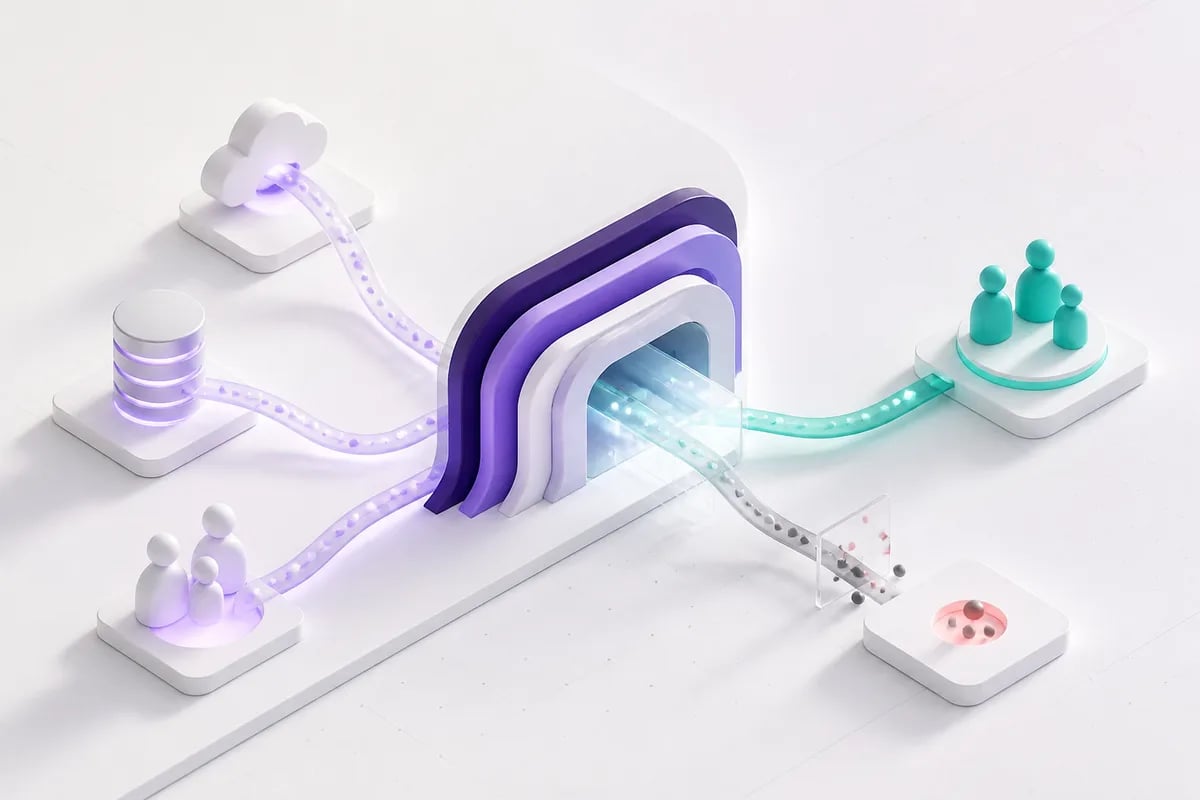
Most mid-size companies run customer data across at least three systems: a CRM for sales history, a support platform for tickets, and increasingly a scheduling or billing tool for operational touchpoints. Salesforce’s research on customer-driven relationships describes today’s environment as one of non-linear touchpoints, where customers move between service, sales, and commerce channels without regard for internal team boundaries. That non-linearity is exactly why system-of-record ambiguity is dangerous. If a customer’s phone conversation isn’t logged back to the CRM before the next sales call, the account executive repeats questions the customer already answered. If a support resolution isn’t reflected in the billing system, a refund promised on a call never gets processed. Edflex frames customer relationship management as deploying tools and techniques to account for customer expectations consistently—but consistency is impossible without a single authoritative source of truth. The fix is not more tools; it’s clarity about which system is canonical for which data type, plus explicit, monitored handoffs between systems rather than assumed ones. This is where most customer relationship failures actually originate: not in the interaction itself, but in the silent data gap between the interaction and the next system that needs to know about it.Where voice AI agents add a new data-flow layer
As companies deploy AI voice agents for inbound support, scheduling, and outbound follow-up, they introduce another node in the customer data graph, and it needs the same rigor applied to any other integration. Persistence lets teams build AI voice agents using their own data and deploy them to phone numbers, with visual or prompt-based agent building, defined knowledge sources, and actions the agent can take during a call. The operationally important part is what happens after the call ends: transcripts, extracted intents, and completed actions need to sync back into the systems that revenue and support teams already rely on. Persistence publicly lists integrations including Twilio, HubSpot, Zendesk, Calendly, Salesforce, Zapier, Intercom, Google Sheets, Stripe, and Shopify, which means a call outcome can update a CRM record, trigger a Zendesk ticket, or book a Calendly slot without manual re-entry. Persistence also supports managed phone numbers and customer SIP trunking, so the telephony layer itself is one fewer system to reconcile separately. Before any of this reaches production, Persistence provides simulated-call testing to validate that data flows and actions behave correctly, plus operational monitoring afterward to catch failures once agents are live—both of which matter more for customer relationships than the conversational polish of the agent itself.Applying the scorecard: what to check before you scale an integration
The scorecard above gives revenue operations teams a repeatable way to evaluate whether a new customer-facing integration—voice, chat, or otherwise—is ready to scale. Start with system-of-record clarity: name the single source of truth for each data type (interaction history, billing status, scheduling) before adding a new tool that writes to any of them. Next, measure sync latency in minutes, not architecture diagrams; a CRM update that lags by hours is functionally the same as no update during a live customer interaction. Then audit failure visibility: ask what happens today when a webhook to your CRM times out, and whether anyone is notified. Many teams discover the honest answer isRelated resources
Continue exploring with Explore Persistence solutions.Frequently asked questions
What is the difference between customer relations and customer relationship management (CRM)?
What is the difference between customer relations and customer relationship management (CRM)?
Customer relations refers to the methods and processes a company uses to build relationships, while CRM typically refers to the software category used to automate data collection and coordinate those processes, according to Zendesk’s overview of customer relations.
How does voice AI affect customer relationships if it's not a human agent?
How does voice AI affect customer relationships if it's not a human agent?
The relationship impact depends less on whether the agent is human and more on whether the interaction data flows correctly into the systems that shape the next touchpoint. Persistence’s approach connects call outcomes into CRM, support, and scheduling tools so context isn’t lost between interactions.
What should we check first if customer relationships feel inconsistent across channels?
What should we check first if customer relationships feel inconsistent across channels?
Start with system-of-record clarity: identify which system is the authoritative source for interaction history, and confirm data actually syncs into it in near real time rather than being entered manually or not at all.
Try Persistence
Build reliable voice AI with Persistence
Design, test, and deploy production-ready voice agents.