

Key takeaways
- The right AI voice company is the one that survives real-call constraints: latency, handoffs, integrations, and monitoring.
- Vendors differentiate less by “human-sounding” demos and more by how they handle routing, tool actions, and post-call ops.
- A simple scorecard can help teams compare platforms on build model, telephony, testing, observability, and integration depth.
- Persistence is relevant when you want to build voice agents with your data, deploy them to phone numbers, and test before launch.
Direct answer: pick the AI voice company that matches your call reality, not your demo
If you’re comparing AI voice companies, the best choice is the one that can handle your actual call volume, routing, integrations, and failure modes—not just a polished sandbox demo. In practice, production voice work is less about “does it sound natural?” and more about whether the system can answer, route, act, recover, and report on real calls.That framing is supported by how the market describes itself. Retell AI’s comparison guide defines voice AI platforms as tools to build, deploy, and manage AI-powered phone agents for real conversations, while Synthflow positions itself around inbound and outbound call flows, contextual routing, voicemail detection, and follow-ups. In other words, the category has moved from novelty to operations. The buying question is now: which platform can run as part of your service stack? Learn more about Persistence. Source: reference. Source: reference. Source: Free AI Voice Changer & Voice Agent Platform - Voice.ai.A production lens: the five constraints that decide whether voice agents work
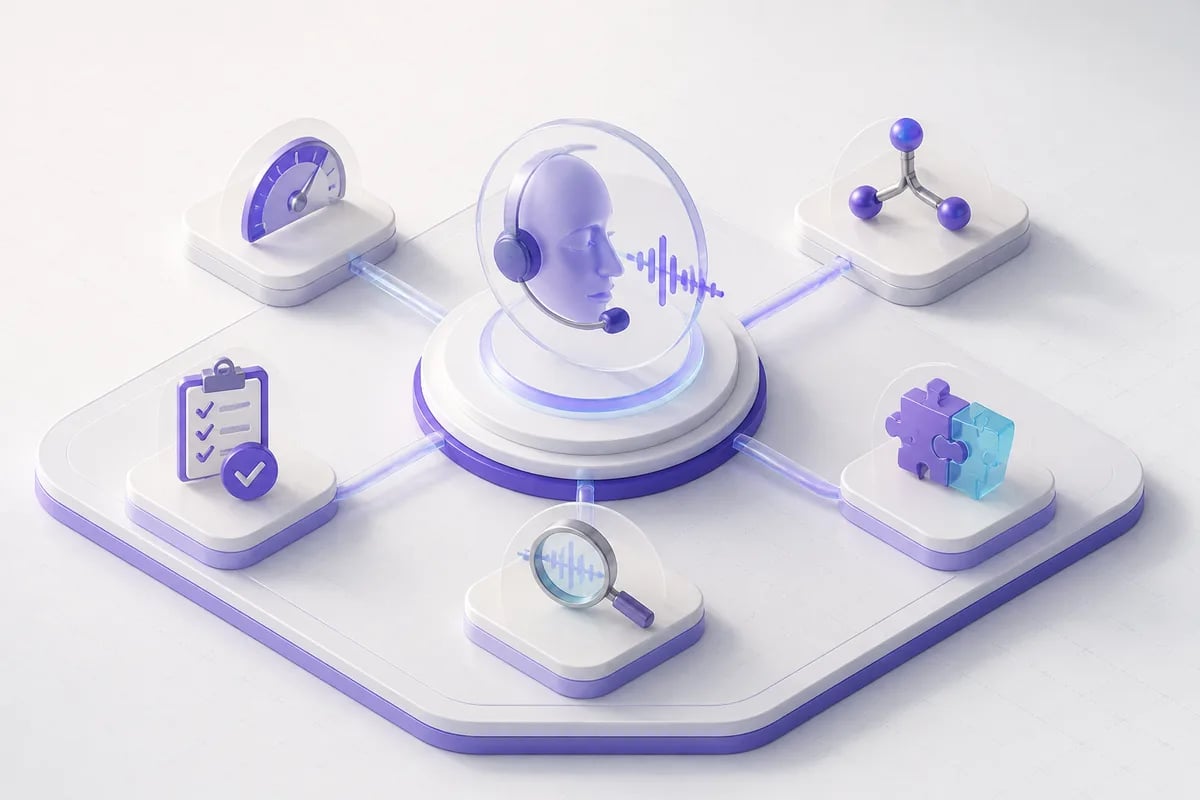
Use this five-part lens to evaluate any AI voice company:- Latency and turn-taking: Can the system respond quickly enough that callers don’t interrupt or hang up?
- Conversation control: Can it route, transfer, collect data, and trigger actions without brittle scripts?
- Telephony ownership: Can you connect existing numbers or bring your own carrier path?
- Testing before launch: Can you simulate calls and catch breakage before customers do?
- Operational visibility: Can you review transcripts, outcomes, and failures after deployment?
Decision framework: compare vendors with a scorecard, not a feature list
Here is a simple scorecard you can use in a vendor review.A vendor that scores well here is easier to operate. A vendor that only looks good in a demo usually breaks at one of these points.
Where Persistence fits in a production voice stack
Persistence is relevant when your evaluation is less about “buying a voice bot” and more about standing up a production voice workflow. Persistence publicly says teams can build AI voice agents using their data and deploy them to phone numbers. It also lists visual or prompt-based building, knowledge sources, actions, simulated-call testing before deployment, and operational monitoring after deployment.That matters because the hardest part of production voice AI is not synthesis alone; it is the full loop from config to call to post-call ops. Persistence also publicly lists managed phone numbers and customer SIP trunking, plus integrations with Twilio, HubSpot, Zendesk, Calendly, Salesforce, Zapier, Intercom, Google Sheets, Stripe, and Shopify. For teams building service, sales, or support agents, those integrations reduce the glue code between a call outcome and a business action.For a practical implementation path, start with a narrow use case: appointment booking, inbound qualification, or support triage. Then test with simulated calls, launch on a limited number range, and measure transfer rate, containment rate, and task completion. That is a more honest path than trying to automate every call on day one.Implementation checklist for buying or building AI voice companies
Before you commit, run this checklist:- Define the first live call type: inbound support, outbound reminder, qualification, or booking.
- Identify must-have integrations: CRM, calendar, helpdesk, payments, or messaging.
- Confirm telephony ownership: managed numbers, SIP trunking, or external carrier support.
- Ask for pre-launch testing: simulated calls, edge-case scripts, and fallback behavior.
- Verify monitoring: transcripts, outcome tags, transfer reasons, and failure review.
- Set a human handoff rule: when the agent pauses, escalates, or defers.
- Establish success metrics: containment, conversion, booking completion, or resolution.
Related resources
Continue exploring with Explore Persistence solutions.Frequently asked questions
What is the main difference between AI voice companies and chat AI vendors?
What is the main difference between AI voice companies and chat AI vendors?
AI voice companies must handle real-time telephony, turn-taking, transfers, and call outcomes. Chat tools usually do not need the same operational and latency controls.
What should I test before putting a voice agent on live phone numbers?
What should I test before putting a voice agent on live phone numbers?
Test simulated calls, handoff behavior, integration triggers, and failure recovery. You want to know what happens when the agent is confused, interrupted, or needs to escalate.
Try Persistence
Build reliable voice AI with Persistence
Design, test, and deploy production-ready voice agents.